How to Make Money on Pinterest in 2026: 10 Proven Ways for Beginners
If you’ve spent any time on Pinterest lately, you’ve probably noticed it feels a little different from other social platforms. There’s no pressure to dance on camera, no algorithm punishing you for taking a week off, no expectation that content disappears after 24 hours. It’s quietly become one of the more underrated places to build an income online and yet most people still treat it like a digital scrapbook instead of the search engine it actually is.
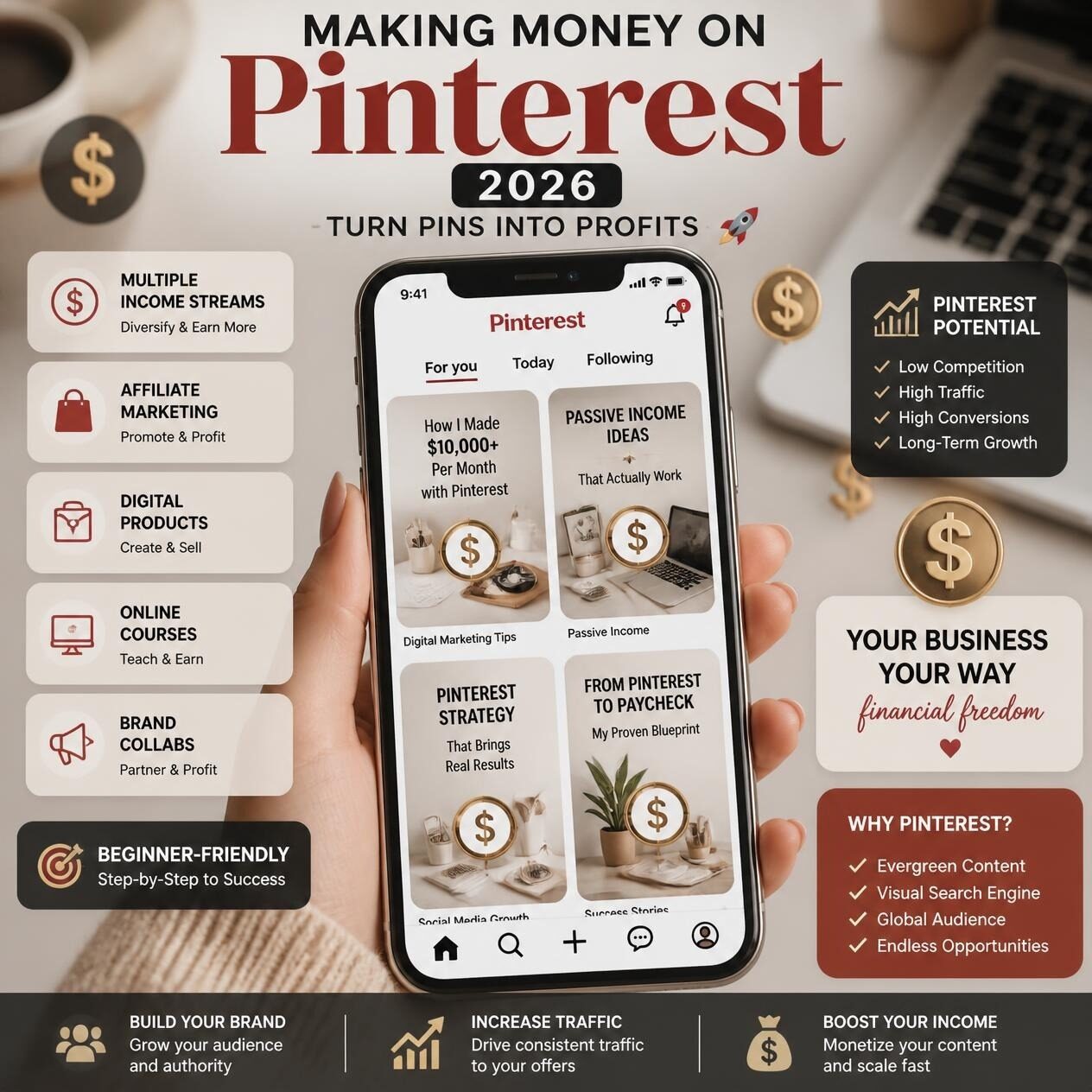
Here’s the thing worth knowing upfront: nobody’s getting rich in their first month on Pinterest. Anyone promising instant thousands is selling you something else. But with consistent effort, Pinterest genuinely rewards people willing to build something over time — and unlike a lot of platforms, a well-made pin can keep driving traffic and income for months or even years after you post it. Here are ten realistic methods worth trying in 2026.
1. Affiliate Marketing
This is the most common starting point, and for good reason. Pinterest explicitly allows affiliate links in pins, so you can join a program like Amazon Associates, LTK, or a brand-specific affiliate network, then create pins linking directly to products you genuinely recommend. When someone clicks through and buys, you earn a commission. The people who do well here tend to focus on a specific niche — home decor, budget travel, recipes — rather than promoting everything under the sun.
2. Shoppable Product Pins
If you sell physical or digital products yourself, product pins let people discover and purchase directly, without needing a third-party affiliate link in the middle. Pinterest’s whole platform is built around people arriving with buying intent already in mind — someone pinning kitchen ideas is often actively planning a purchase, not just browsing idly. That mindset makes shoppable pins a genuinely strong fit if you already have something to sell.
3. Print on Demand
Selling custom-designed products — t-shirts, mugs, tote bags, wall art — without holding any inventory yourself is a solid entry point if you’ve got a creative eye but not a lot of startup capital. You design once, connect it to a print-on-demand service and pin consistently to drive traffic toward your listings. It’s not instant income, but it scales well once you’ve built a catalog of designs people actually want.
4. Digital Products
This is one of the more scalable methods on this list, mainly because the product only needs to be built once and can keep selling indefinitely with no extra work per sale. Templates, ebooks, printables, planners and presets are all popular categories. Pin consistently linking back to your product listing, and over time those pins can keep generating sales long after you’ve moved on to other projects.
5. Sponsored Content and Brand Partnerships
Once you’ve built a decent following and consistent engagement, brands may reach out to pay you for featuring their products in your pins. This method takes longer to unlock than the others, since brands generally want to see an established, active account before committing budget. But it’s a genuine income stream for creators who’ve put in the time to build real traction.
6. Driving Traffic to a Monetized Blog
If you already run a blog with display ads, Pinterest is one of the most effective free traffic sources available. A single well-optimized pin can send visitors to your site for months and even a modest but steady stream of blog traffic adds up in ad revenue over time. This method works especially well paired with a niche blog covering recipes, DIY projects, or how-to content — exactly the kind of thing people search Pinterest for.
7. Selling Your Own Handmade or Physical Products
If you make things — jewelry, art, home goods, candles — Pinterest is a strong discovery channel for exactly that kind of shopper. Pinning your products alongside styled lifestyle photos, rather than plain product shots alone, tends to perform better, since it helps people picture the item in their own life rather than just seeing it in isolation.
8. Offering Freelance Pinterest Management Services
Not every business owner has the time or knowledge to run their own Pinterest strategy, which has created real demand for freelancers who specialize in exactly that — account setup, keyword-rich board creation and consistent pin scheduling. If you’ve learned how to do this well for your own account, that skill itself is marketable to other businesses who’d rather pay someone than learn it from scratch.
9. Running Pinterest Ads to Promote Your Own Store
For anyone with an existing product or service, promoted pins let you put paid budget behind your best-performing content instead of relying entirely on organic reach. It requires some upfront spend and a willingness to test different ad creative, but it can meaningfully speed up traffic and sales growth compared to waiting for organic pins to gain traction on their own.
10. Building an Email List to Sell Later
This one’s a longer game, but it’s worth including. Rather than trying to convert a Pinterest viewer into a buyer immediately, some creators use pins to funnel people toward a free resource in exchange for an email address, then nurture that list toward a paid product or service down the line. It takes patience, but an engaged email list tends to convert better over time than cold traffic alone.
How to Choose the Right Method to Start With
Ten options is a lot, so here’s a simple way to narrow it down. If you want to start earning with the least upfront cost, affiliate marketing or driving blog traffic are the most accessible entry points. If you’re more creative and want something scalable, digital products or print on demand fit better. Already running a small business or offering a service? Shoppable pins and Pinterest ads will get you the most direct return.
Whatever you choose, resist the urge to try all ten at once. Pick one or two methods that genuinely match your skills and schedule, spend the first month or two focused purely on creating valuable, keyword-optimized content, and layer in monetization once you’ve got some traction. Trying to do everything simultaneously usually means doing nothing particularly well.
Final Thoughts
Making money on Pinterest in 2026 isn’t about chasing viral pins or gaming the algorithm — it’s about consistent, keyword-smart content that keeps working long after you’ve hit publish. Pick a method that fits your actual skills and available time, commit to showing up regularly for a few months, and let Pinterest’s unusually long content lifespan do some of the compounding for you.Which of these methods are you thinking about trying first? Let me know in the comments — I’d love to hear where you’re starting.
Set Up Pinterest for a Real Business Goal
Choose one audience and one useful destination for your pins, such as a helpful blog post, product page, portfolio, or shop. Create original pin designs with readable text and accurate descriptions. A pin should set the right expectation and lead to a page that genuinely answers the searcher’s question.
Understand the Work Behind Monetization
Pinterest is a discovery platform, not a guaranteed income source. Results depend on content quality, audience demand, seasonal interest, clicks, and the usefulness of the destination page. Affiliate programs have their own approval rules and commission terms; disclose affiliate relationships clearly and do not imply that you personally tested a product if you did not.
A Beginner’s 30-Day Test
- Pick one topic and prepare a small group of useful, distinct pages.
- Create several original pin designs for each page rather than repeating identical images.
- Use descriptive titles and relevant keywords naturally.
- Track impressions, outbound clicks, sign-ups, and actual sales separately.
- Improve pages and pins based on evidence instead of chasing every trend.
For more background, read our guide to realistic ways to make money online.