Technology stories can move quickly, but not every headline signals a change that will affect everyday life. The most useful way to understand global tech trends in 2026 is to look beyond announcements and ask three questions: what problem does the technology solve, who can realistically use it, and what risks or costs come with it?
Several themes continue to shape the technology news cycle: practical artificial intelligence, more powerful and specialised chips, connected devices, cybersecurity, data-centre energy demand, and the rules governments are developing for digital services. These trends overlap, but each affects consumers and businesses in a different way.
This guide explains five major global tech trends, why they matter, and what to watch before accepting bold predictions at face value.
1. Artificial Intelligence Is Moving Into Everyday Work
AI is no longer limited to chatbots or image generators. Businesses are testing it for customer support, document summaries, software assistance, research, marketing drafts, and repetitive administrative tasks. The important shift is not simply that AI can produce content; it is that more tools are placing AI inside software people already use.
That convenience does not make every output reliable. AI systems can misunderstand instructions, invent details, or miss context. A sensible workflow treats AI as an assistant: use it to prepare a first draft or organise information, then check important claims and make the final decision yourself.
What to watch
- Whether a tool saves measurable time on a real task.
- How it handles private documents and customer information.
- Whether a human can review, correct, or reverse its actions.
- Its ongoing price, usage limits, and integration with existing software.
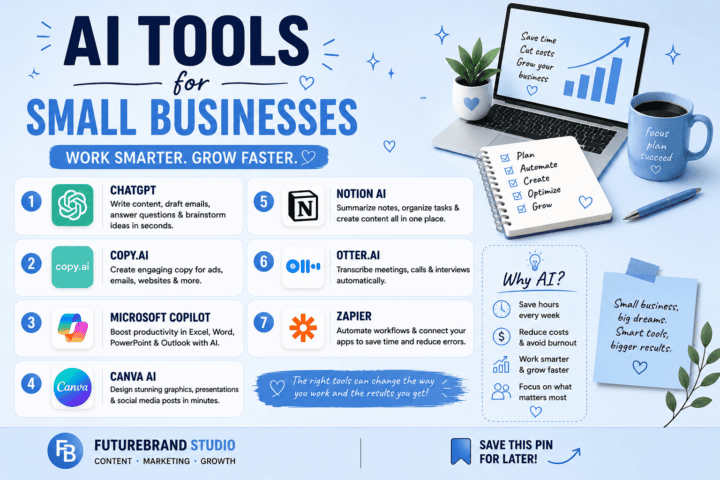
For practical examples, see our guide to AI tools for small businesses. It is more useful to compare tools by the job they do than to choose one because it is receiving the most attention.
2. Chips and Computing Capacity Remain Strategic Priorities
Modern services depend on semiconductors: the processors in phones and laptops, the chips inside network equipment, and the accelerators used to train or run large AI models. Demand for computing is encouraging manufacturers and cloud providers to invest in new hardware, while governments view chip supply chains as an economic and security issue.
Not every chip serves the same purpose. A phone processor is designed around a balance of performance, battery life, heat, and cost. Data-centre accelerators focus on handling large workloads, while memory and networking hardware determine how quickly systems can move and process information. A shortage or price increase in one part of the supply chain can affect product availability or operating costs elsewhere.
For consumers, this does not automatically mean every device will become more expensive. Retail prices also depend on competition, inventory, exchange rates, product positioning, and the manufacturer’s decisions. The practical lesson is to compare the complete device rather than assuming that a newer processor alone makes an upgrade worthwhile.
3. Cybersecurity Is Becoming a Basic Digital Skill
As more work, shopping, education, and personal communication move online, attackers have more opportunities to exploit weak passwords, fake login pages, stolen sessions, and unpatched software. Security is therefore not only an issue for large companies. A compromised email account can expose other accounts that use it for password recovery.
Useful protection starts with simple habits: use unique passwords, turn on multifactor authentication, install updates, keep recovery details current, and pause before opening unexpected attachments or payment links. A password manager can make unique passwords easier to maintain. Website owners should also keep their content-management system, themes, and plugins updated and remove components they no longer use.
No single product prevents every attack. Security improves when several sensible measures work together, and when people know how to report suspicious activity. For bloggers, our free cybersecurity tools guide covers practical starting points.
4. Smart Devices Are Useful Only When They Work Together
Smart speakers, cameras, lighting, thermostats, watches, and home appliances can automate routine tasks. The benefit is not the number of connected devices; it is whether they make a household or workplace easier to manage. A motion sensor that turns on a hallway light can be more useful than a complicated device that requires constant troubleshooting.
Compatibility is a common problem. Before buying a device, check which app or ecosystem it needs, whether it can operate without a cloud subscription, what happens if the internet goes down, and how long the manufacturer promises software support. Review privacy settings as well: cameras and microphones deserve particular care because they can collect information about people who did not choose the device.
Start with one clear use case, confirm that the product works with equipment you already own, and expand only if it genuinely improves daily life. Our article on smart home gadgets offers examples to compare.
5. Data Centres, Energy, and Infrastructure Are Part of the AI Story
Online services may feel weightless, but they rely on physical infrastructure: data centres, power systems, cooling equipment, fibre networks, and backup capacity. AI workloads can require substantial computing resources, so the location and efficiency of that infrastructure matter to operators, communities, and energy planners.
It is important to separate a general trend from a specific local claim. Energy use varies by facility, workload, cooling design, electricity mix, and how efficiently the hardware is used. A headline about one project should not be treated as proof that every data centre has the same impact.
Look for reporting that identifies the project, explains its expected power demand, distinguishes planned capacity from actual use, and describes how water, cooling, and electricity will be managed. These details make the difference between useful infrastructure reporting and a dramatic but incomplete headline.
6. Governments Are Trying to Set Clearer Digital Rules
Policymakers are working through questions about AI transparency, privacy, online safety, competition, copyright, and responsibility when automated systems cause harm. The rules differ by country, and implementation timelines can change, so a regulation announced in one region should not automatically be assumed to apply worldwide.
For users and businesses, the practical questions are straightforward: what data is collected, what consent is required, who is responsible for errors, how can a decision be challenged, and what records should be kept? Organisations operating internationally may need to consider more than one legal framework.
When reading a policy story, check whether it describes a proposal, an adopted law, or a rule that is already being enforced. Those are different stages, and headlines sometimes blur them together.
How to Separate a Real Trend From Hype
Technology coverage often combines confirmed product details with forecasts and company promises. Before making a purchase or changing a business process because of a headline, use this quick checklist:
- Find the original source. Prefer official documentation, regulatory notices, published research, or a clearly attributed announcement.
- Check the date. Older stories can circulate again after a product update or a policy change.
- Look for independent confirmation. One company’s marketing claim is not the same as independently tested performance.
- Separate availability from a demonstration. A prototype or limited test does not prove a product is broadly available.
- Consider the trade-offs. Cost, reliability, privacy, accessibility, and maintenance matter alongside new features.
What These Trends Mean for Everyday Users
You do not need to adopt every new platform to keep up with technology. Choose tools that solve a clear problem, protect your accounts, check compatibility before buying connected devices, and review subscriptions you no longer use. If you run a website or small business, invest time in backups, updates, and a realistic plan for handling customer data.
Students can also benefit from learning how to evaluate digital information instead of accepting every AI-generated answer or viral post as fact. Our guide to evidence-informed study techniques explains ways to test understanding and retain information.
Frequently Asked Questions
What is the biggest technology trend in 2026?
AI is a major theme, but its impact depends on the task, the quality of the tool, and how people use it. Cybersecurity, semiconductor supply, connected devices, and digital regulation are also important.
Will AI replace every job?
No reliable source can support a claim that every job will disappear. AI may automate parts of some roles, change workflows, and create demand for different skills. The effects vary by occupation, employer, and how the technology is deployed.
How can I stay informed without following every headline?
Choose a small number of credible sources, verify major claims against primary documents, and focus on developments that affect your work, devices, privacy, or spending. A clear explanation is usually more valuable than a sensational prediction.
Final Thoughts
The global technology story in 2026 is not one breakthrough that changes everything overnight. It is a collection of connected shifts in AI, computing hardware, security, connected devices, infrastructure, and regulation. Understanding the benefits and limits of each trend helps readers make better decisions and avoid buying into claims that are not yet proven.