Artificial intelligence is changing how films are planned, edited and produced, but the idea that actors and filmmakers are about to disappear is too simple. In 2026, studios are experimenting with AI tools while performers and creative unions push for clearer rules on consent, compensation and the use of digital replicas.
The more useful question is not whether AI will replace everyone. It is which tasks are becoming easier to automate, which jobs face pressure, and how productions decide when a human performance or creative decision is essential.
The Short Answer: AI Is Changing Film Work, but Replacement Is Not Automatic
AI can generate visual concepts, help organize footage, assist with translation and dubbing, and create synthetic people or digital versions of real performers. These capabilities can reduce the time needed for some tasks and may change the size or composition of production teams.
However, automating a task is not the same as automating an entire profession. A director shapes a story and guides performances. An actor makes choices about timing, emotion and character. An editor decides how shots work together and what a scene communicates. AI may assist with parts of this work, but a production still needs people to make creative, legal and practical decisions.
Where AI Is Being Used in Filmmaking
1. Pre-production and visual planning
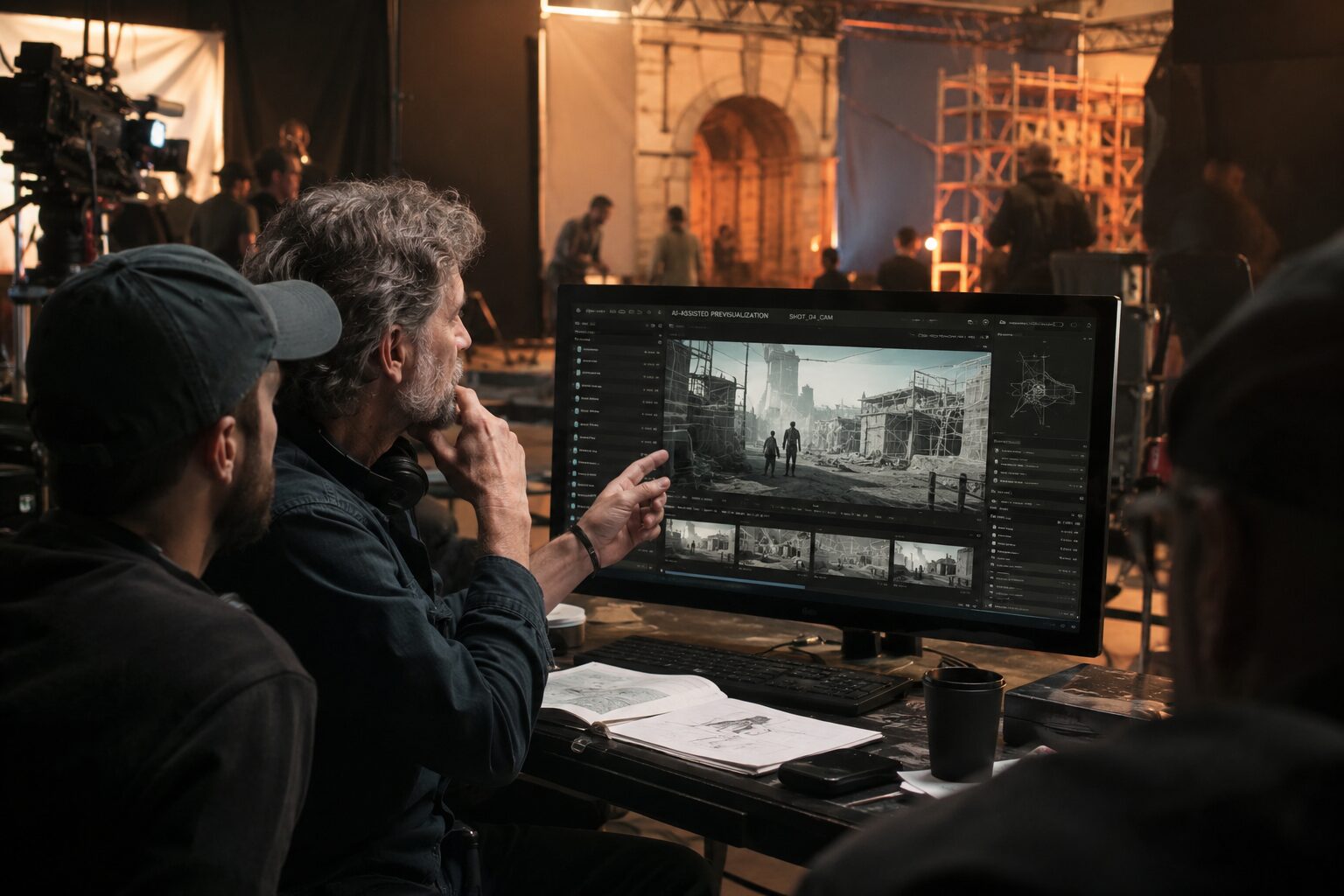
Before filming begins, teams can use AI-assisted tools to explore storyboards, mood references, locations, shot ideas and visual styles. This can help a director communicate an idea to producers or test different approaches before spending money on a full shoot.
Generated images are still proposals, not finished creative decisions. The team must check whether a concept fits the script, can be produced safely, respects rights and supports the intended story.
2. Editing and post-production
AI features can help transcribe dialogue, search large amounts of footage, remove some unwanted objects, clean audio or speed up repetitive editing tasks. These tools may free editors to spend more time on rhythm, continuity and performance choices.
There are limits. Automated suggestions can miss context, damage details or produce inconsistent results. Editors and post-production specialists still need to review the output, correct errors and make the final decisions.
3. Dubbing, translation and voice work
AI can support translation workflows, voice synthesis and lip-sync adjustments for international releases. These uses could make some localization work faster, but they also raise important questions: Was the performer informed? Is the voice being used within the agreed scope? Who receives compensation, and who can approve changes?
Studios should not treat technical capability as permission. Voice, likeness and performance rights depend on the relevant contracts and laws.
Could AI Replace Background Actors or Create Synthetic Performers?
This is one of the areas where AI may have a direct effect on employment. Some productions can use digitally created crowds, background figures or synthetic characters for particular shots. In certain circumstances, that could reduce the need to hire people for a specific task. It does not prove that all background performers or lead actors will be replaced, but the risk deserves serious attention.
SAG-AFTRA’s 2026 TV/Theatrical Agreement includes protections relating to digital replicas and synthetic performers. The union says the agreement strongly favors human performances and adds restrictions and bargaining requirements around the use of synthetic performers. Its published explanation says producers have committed not to use a synthetic in a human role that would otherwise be performed by a person unless it provides “significant additional value” to the production.
These protections apply within the agreement’s scope; they are not a universal guarantee for every performer, production or country. Actors should read the terms of any scan, voice capture or digital-replica agreement carefully and seek qualified advice when necessary.
Digital Replicas Make Consent Especially Important
A digital replica is a digital version of a person’s appearance or performance. It can potentially be used to create new footage, alter an existing scene or reproduce a performance in a way the person never physically performed. The technology can be useful in some productions, but it creates serious questions about control and misuse.
The late actor Val Kilmer became a prominent example in 2026 when SAG-AFTRA addressed reporting about his digital replica in the film As Deep as the Grave. The union said it understood that the family’s consent had been obtained and emphasized that applicable agreements and state law require consent from an estate for covered uses of a deceased performer’s digital replica.
The lesson is not simply that AI can recreate an actor. It is that permission, the scope of use, compensation and accountability matter as much as the technology. A valid agreement should make clear what is being created, where it can be used, for how long and under whose control.
What the 2026 SAG-AFTRA Agreement Means
SAG-AFTRA members ratified a new TV/Theatrical Agreement in June 2026. The union’s published materials describe additional protections for digital replicas and synthetic performers, including stronger notice and bargaining rules, protections around scanning performers, and mechanisms to challenge certain violations.
The agreement is significant because it recognizes that AI can affect both employment and a performer’s identity. But contract protections are only one part of the picture. Their effect depends on the agreement’s definitions, the type of production, the performer’s coverage and the facts of a particular situation.
For current details, readers should consult SAG-AFTRA’s official 2026 TV/Theatrical contract guidance rather than relying on social media summaries.
What About Directors and Screenwriters?
Actors are not the only people affected. Directors may use AI to explore visual approaches or plan sequences, while writers may encounter AI-generated material during development. The risks differ by role: a tool might speed up one step, change the amount of work assigned to a team or create disputes about credit, ownership and consent.
The Directors Guild of America’s 2023 agreement established protections concerning the use of generative AI in work covered by its contract. The Writers Guild of America’s 2023 agreement also set rules for AI-generated material, including that companies cannot require writers to use AI when performing writing services and must disclose certain AI-generated material supplied to writers.
These are contract rules, not a promise that creative jobs will never change. They show why workers need clear agreements about how tools can be used and who remains responsible for the finished work.
AI Can Create Opportunities for Independent Filmmakers
AI-assisted workflows may help small teams test ideas, prepare visual references, handle certain routine tasks or create effects that would otherwise be too expensive. That can make some projects more achievable for independent filmmakers with limited budgets.
Lower production costs do not automatically mean a better film. Creators still need a strong script, coherent performances, careful editing, appropriate permissions and quality control. They should also check the terms of each tool, including whether uploaded footage may be retained or used for training, and whether generated material creates copyright or licensing concerns.
Which Film Jobs May Face More Pressure?
The impact will vary by task, budget and production. Repetitive processes and work that can be described with clear rules may be easier to automate than jobs requiring complex judgment, collaboration and responsibility. Even so, no role should be assumed completely safe or inevitably doomed.
| Area | Possible AI contribution | Important human role |
|---|---|---|
| Pre-production | Visual concepts and planning references | Choosing ideas that serve the story and budget |
| Editing | Transcription, searching and repetitive adjustments | Pacing, continuity and emotional structure |
| Localization | Translation support, voice and lip-sync tools | Language quality, consent and performance nuance |
| Background scenes | Synthetic figures or generated crowds | Performance requirements, direction and labor protections |
| Writing | Brainstorming or draft assistance | Original decisions, accountability and agreed authorship |
| Directing | Visualization and workflow support | Creative leadership and responsibility for the production |
What Actors and Filmmakers Can Do Now
- Read contracts carefully: Check clauses covering scans, voice recordings, digital replicas, reuse, duration and compensation.
- Keep written records: Save consent forms, licensing terms and communications about how your work or likeness may be used.
- Learn practical tools: Understand where AI can improve a workflow, while checking outputs rather than accepting them automatically.
- Protect confidential material: Do not upload unreleased scripts, footage or client files to a service without permission and a clear understanding of its data terms.
- Follow reliable updates: Union guidance and the terms of actual contracts are more useful than dramatic predictions about every job disappearing.
So, Will AI Replace Actors and Filmmakers?
As of 2026, the evidence points to a changing production process rather than the complete disappearance of actors, directors, editors and writers. AI can already assist with specific tasks and create synthetic performances, and some jobs may face real pressure as studios weigh cost, speed and creative needs.
The outcome will depend on the quality of the technology, audience expectations, production budgets, labor agreements and laws. Some teams will use AI as an assistant; others may use it to reduce particular kinds of work. Those choices should be assessed honestly rather than presented as either harmless innovation or inevitable mass replacement.
For people working in film, the practical response is to understand the tools, protect their rights and keep developing the creative and collaborative skills their work requires. For audiences, the important questions are whether the finished work is good, whether people’s rights were respected and whether the use of synthetic material is transparent when it matters.
Frequently Asked Questions
Will AI replace actors in movies?
AI can create synthetic performers and digital replicas, and some productions may use them for specific needs. That does not mean all actors will be replaced. Contractual protections and consent requirements apply in certain covered productions and jurisdictions.
Can AI replace film directors?
AI can assist with planning and visualization, but directing includes decisions about performances, story, tone and collaboration. Agreements such as the DGA contract also set rules for work covered by that agreement.
Can a production use an actor’s face or voice without permission?
The answer depends on the facts, the contract and applicable law. Performers should review consent and digital-replica clauses carefully and seek qualified advice when uncertain.
Does AI make filmmaking cheaper?
It may reduce the time or cost of some tasks, but savings are not guaranteed. Licensing, review, corrections, compute, production integration and legal compliance can also add costs.
Where can I check the latest actor AI protections?
Start with SAG-AFTRA’s official contract information. For broader industry reporting, see the Los Angeles Times report on Hollywood’s AI hiring.