
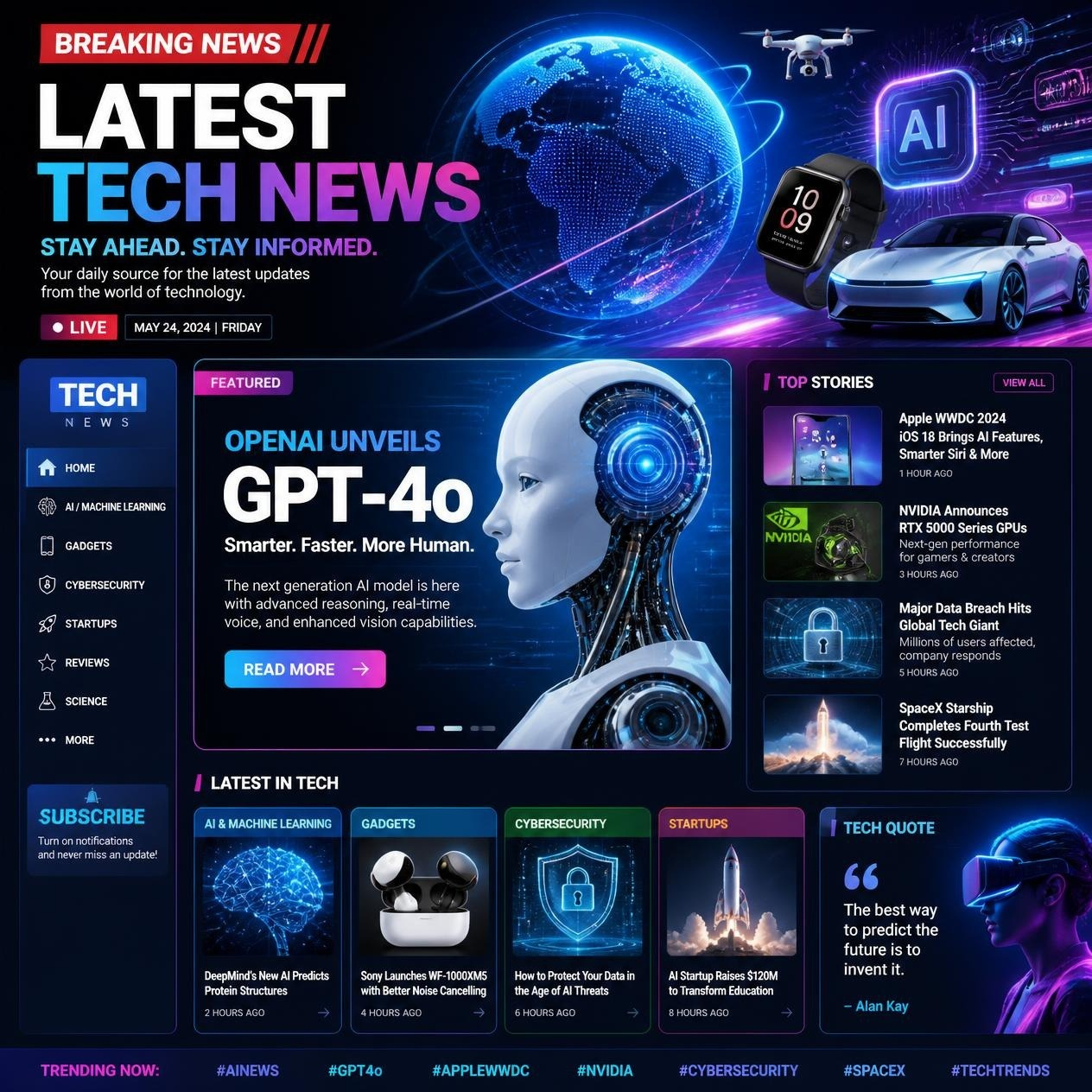
Technology headlines often mix confirmed developments with forecasts, company announcements, and speculation. To understand what matters, it helps to connect the news to practical questions: how will a change affect the products people buy, the businesses they use, the security of their data, or the infrastructure that supports digital services?
In 2026, several themes deserve attention: AI deployment, demand for computing hardware, autonomous software agents, robotics, data-centre infrastructure, and the rules governing digital technology. Their pace varies, and a demonstration or announcement is not the same as a widely available product. The sections below explain what to watch and how to evaluate claims carefully.
1. AI Is Moving From Demonstrations Into Everyday Workflows
AI features are increasingly appearing inside writing tools, customer-support platforms, office software, coding environments, search products, and business applications. This makes AI easier to try because users may not need to adopt a completely separate service.
The important test is whether a feature solves a real problem reliably. Summarising a long document, drafting a first version of an email, or classifying support requests can save time. But the same system may miss context, produce incorrect details, or struggle with unusual cases. Sensitive decisions still require human review, and private information should not be pasted into a service without understanding its data policy.
For a small business, compare tools by task, accuracy, privacy controls, integration, and total cost. Our guide to AI tools for small businesses provides a practical starting point.
2. Semiconductor Supply and Computing Costs Still Matter
AI models, cloud services, phones, cars, and industrial equipment all depend on semiconductor components. Processor performance is only one part of the system: memory, networking, storage, cooling, and power delivery can also limit what a device or data centre can do.
Investment in new manufacturing capacity takes time, and the supply chain spans many countries and specialised suppliers. That means a shift in demand or a disruption at one stage can affect prices and availability elsewhere. However, it would be misleading to assume that every device price rises in the same way. Retail prices also depend on competition, inventory, exchange rates, and product strategy.
For buyers, compare the complete product rather than chasing the newest processor. Consider the work you do, expected software support, memory, battery life, repairability, and the cost of upgrading accessories.
3. AI Agents Need Careful Boundaries
Many AI products are moving beyond answering a question toward completing multi-step tasks, such as preparing a report, organising information, or interacting with approved software. These systems are often described as agents. Their usefulness depends on how well they plan, use tools, recover from errors, and keep the user informed.
More autonomy also creates new risks. An agent might misunderstand an instruction, use an outdated source, or take an action the user did not intend. Before connecting one to email, files, payments, or customer records, check its permissions and start with low-risk tasks. Require confirmation before irreversible actions, and keep logs where possible.
For now, treat agent capabilities as task-specific rather than assuming a system can safely run an entire workflow without supervision. Test it against clear success criteria and keep a manual fallback.
4. Robotics Is Expanding, but Real-World Reliability Is the Test
Robots are used in factories, warehouses, agriculture, hospitals, laboratories, and other controlled environments. Progress in sensors, computer vision, and AI can help machines handle more varied tasks, but real-world settings remain difficult: objects differ, lighting changes, floors become cluttered, and safety rules limit movement.
When a company announces a new robot, look for evidence beyond a polished demonstration. Is the system operating with paying customers? How often does it need human intervention? What tasks can it complete, what conditions cause failure, and what does maintenance cost? Those details say more about commercial readiness than a short video.
Robotics is likely to remain a mix of highly effective specialised systems and more experimental applications. The distinction matters when evaluating predictions about labour, productivity, or the timing of widespread adoption.
5. Cybersecurity Is Central to Digital Business
As more services rely on connected accounts and cloud platforms, basic security failures can have consequences beyond one device. A compromised email account may expose password resets, invoices, customer conversations, and access to other services.
Individuals should use unique passwords, enable multifactor authentication, keep devices updated, and verify unexpected requests for money or login details. Website owners should maintain backups, remove unused plugins, and apply updates to WordPress core, themes, and extensions. No tool can replace good account practices and a recovery plan.
Bloggers looking for a low-cost starting point can review our guide to free cybersecurity tools for bloggers. Check each product’s current features and terms before relying on it for protection.
6. Data Centres and Energy Demand Are Part of the Story
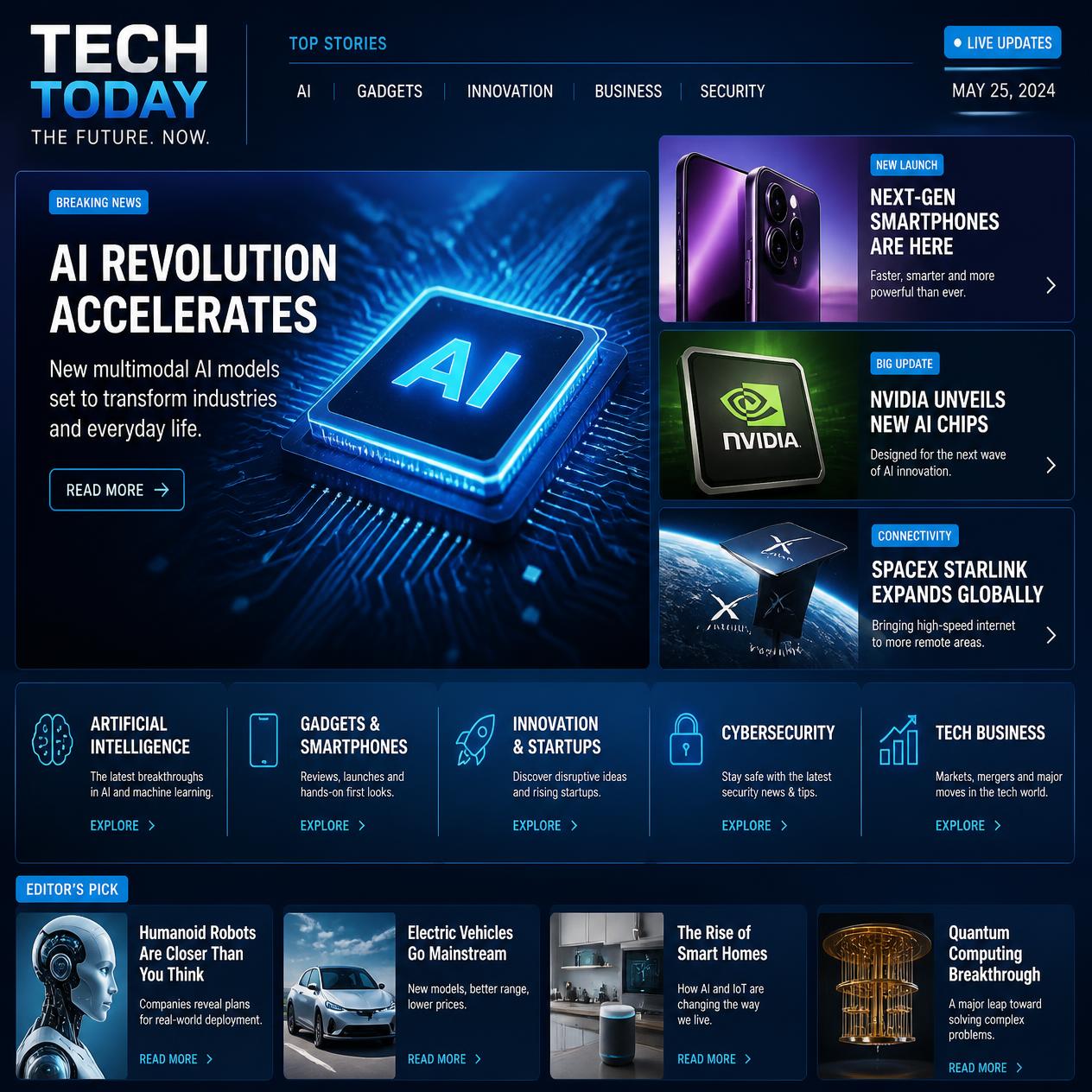
Cloud applications and AI services depend on physical infrastructure, including servers, cooling, electricity, backup systems, and network connections. Data-centre projects therefore raise questions about power availability, efficiency, water use, local planning, and how electricity is generated.
Specific claims need specific evidence. A proposed facility’s planned capacity is not the same as its actual energy use, and facilities differ by workload, design, location, and power source. Strong reporting identifies the project and explains whether figures are measured, estimated, or projected.
Efficiency improvements matter too. Hardware utilisation, cooling design, workload scheduling, and the energy mix can all affect the footprint of a computing service. Avoid reducing a complicated infrastructure question to a single dramatic number without context.
7. Digital Rules Are Evolving Across Regions
Governments are addressing questions around privacy, AI transparency, online safety, competition, copyright, and accountability. Rules differ by jurisdiction, and the legal status of a measure can change as it moves from proposal to adoption and enforcement.
When a regulation appears in the news, check which country or region it covers, which organisations must comply, when obligations begin, and whether the article describes a proposal or an active requirement. Businesses serving users in multiple markets may need to meet more than one set of rules.
For ordinary users, the practical questions are how a service collects data, how to change privacy settings, whether automated decisions can be challenged, and where to report a problem. These details often matter more than broad claims that a new law will immediately transform the internet.
How to Read Technology News Critically
- Find the original announcement or document. A summary is easier to evaluate when you can see what the company, researcher, or regulator actually said.
- Check the publication date. Product features and policies can change, while older headlines may continue circulating.
- Separate evidence from prediction. A tested capability, a planned launch, and an analyst forecast are different kinds of information.
- Look for independent testing. Marketing material rarely covers every limitation or failure case.
- Ask who benefits. A company may have a commercial reason to describe a product in especially positive terms.
- Consider the trade-offs. Price, privacy, reliability, accessibility, and maintenance are part of the technology story.
What Should Readers Do With These Trends?
You do not need to adopt every new tool to stay informed. Choose technology that meets a real need, review privacy settings, keep accounts secure, and avoid replacing a working device simply because a new model has been announced. Businesses should test new software on a limited scale before relying on it for important operations.
Students and professionals can build a durable advantage by learning how to verify information, understand basic cybersecurity, and use digital tools responsibly. Those skills remain valuable even as individual products change.
Frequently Asked Questions
Which technology trend should businesses watch most closely?
Start with the trend that affects your actual work. AI may help with repetitive tasks, while cybersecurity, reliable infrastructure, and data protection matter to nearly every digital business. Test potential benefits instead of adopting a tool because it is popular.
Are AI agents ready to work without human supervision?
Some systems can complete defined tasks under controlled conditions, but reliability varies. Use limited permissions, test edge cases, and require approval for sensitive or irreversible actions.
How can I tell if a technology headline is exaggerated?
Look for a primary source, independent confirmation, clear dates, and details about limitations. Be cautious when a headline turns a prototype, forecast, or company claim into a statement that something is already widely available.
Final Thoughts
The technology news cycle is shaped by connected developments in AI, chips, automation, cybersecurity, infrastructure, and digital policy. The best way to follow these changes is to look for evidence, understand the trade-offs, and focus on what affects your needs. That approach is more useful than trying to keep up with every announcement.


[…] For related coverage, explore our guides to global tech trends and the technology news worth following. […]
[…] Related reading: global technology trends and technology news worth following. […]